New England Philharmonic serves up a rich and bracing variety of new music
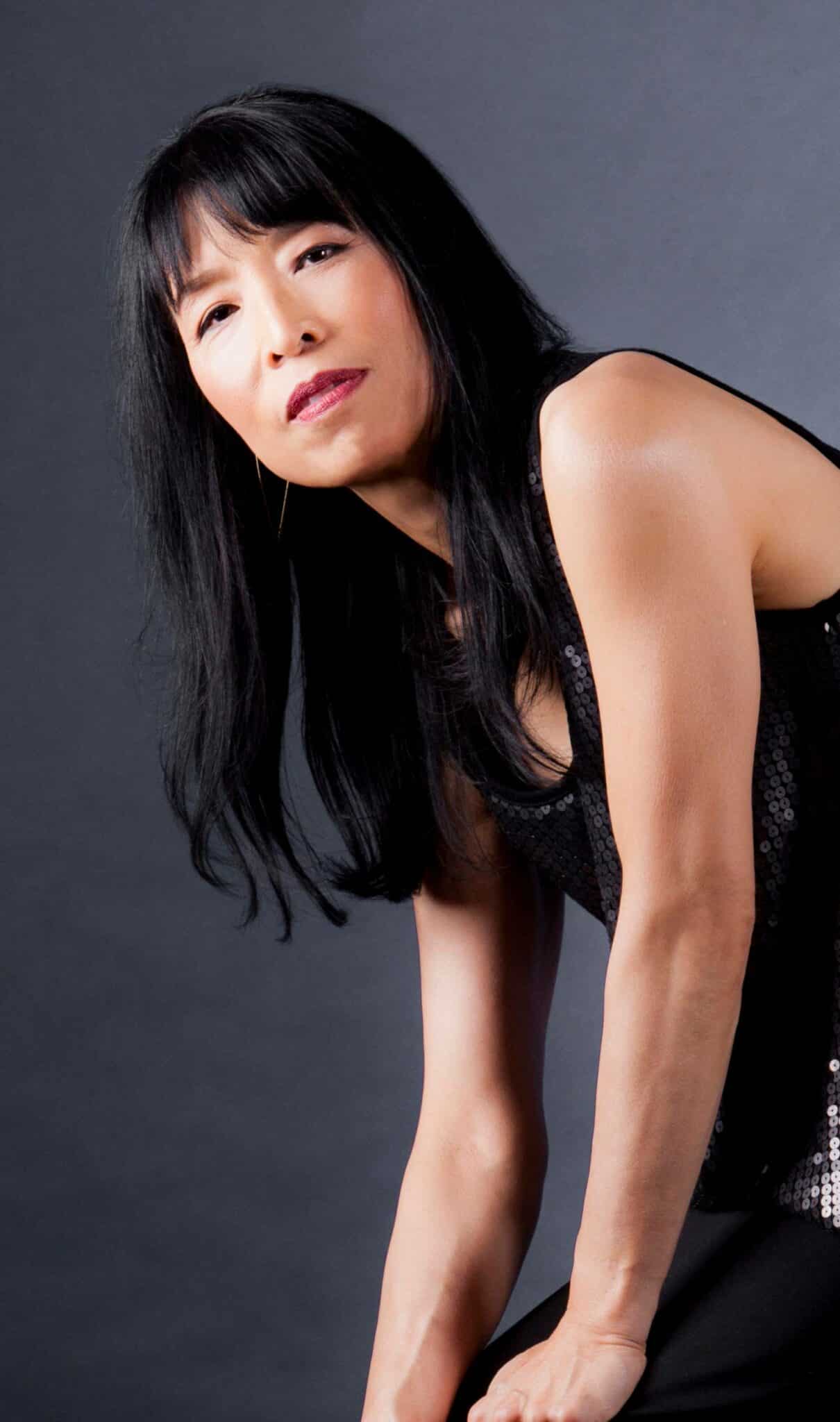
Gloria Cheng was the soloist in the world premiere of Daniel S. Godfrey’s Piano Concerto with the New England Philharmonic on Sunday.
The Ides of March may have been unlucky for Julius Caesar in 44 B.C. But it was a very good day this year for contemporary music in Boston: prior to the New England Philharmonic’s concert at Tsai Performance Center on Sunday, orchestra vice president Anne Teixeira noted that no fewer than seven new music events were happening concurrently across the metropolis.
One trusts the other six were as well-attended and enthusiastically received by their hearers as the NEP’s “New Music New England” affair, which boasted four world premieres from a tetrad of composers with local ties.
The first and shortest of those came from NEP composer-in-residence Carlos Carrillo, whose Hasta que apunte el día, y huyan las sombras (Until the day dawns, and the shadows flee) only lasted about two minutes. Admirably direct, the score’s atmospheric melodic simplicity was dispatched with graceful transparency by concertmaster Lisa Pettipaw, the orchestra, and music director Tianhui Ng.
Jason Huffman’s Alleles was similarly straightforward, at least conceptually. Built around a three-note motive that’s put through various transformations, the composer’s pre-concert comments suggested a kinship between his effort and Samuel Barber’s orchestral Essays.
That connection was at least intermittently apparent, though Huffman’s score ultimately came across as more a series of blocky paragraphs rather than a polished dissertation. Some of that may have owed to the performance, which was led by NEP assistant conductor Julian Gau and felt somewhat slack and thin toned.
But the music itself didn’t always hold the ear, its transitions abrupt and its slow, amorphously dissonant sections lacking a needed measure of distinction. Better were Alleles’ rhythmically lively parts and its mysterious coda, in which Huffman’s writing really took flight.
The afternoon’s two biggest items were Daniel S. Godfrey’s Concerto for Piano and Orchestra and Curtis K. Hughes’ Symphony in 3 Movements.
Though the latter shares a title with Stravinsky’s famous opus—as well as an enthusiasm for abstraction—it occupies a very different sonic world. Written in 2005, the 22-minute-long score wasn’t performed until this weekend thanks, in part, to its “impracticality” (as the composer put it in a program note).
Even in revised form, though, the music’s youthful, discursive seams still showed. Nor did Sunday’s reading feel entirely secure: the finale, especially, was enigmatic and tentative, its attempts at dancing done in by a lack of centripetal rhythmic pull.
Though the middle section meandered a bit, its alternations of pillowy textures with queasy, dissonant ones emerged well. So, too, the opening part’s lucid plays of color. Here, Ng and the NEP navigated Hughes’ soupy textures with impressive readiness.
Godfrey’s concerto was the afternoon’s most thoroughly satisfying installment. Titled “In a Time of Foreboding,” the score’s three movements follow a traditional moderate-slow-fast pattern without veering into caricature or predictability.
Where is the “fear” and “resolve” indicated in the first section’s subheading? It’s hard to say—though the Williams-esque brass refrains and striding, Barber-worthy opening piano solo perhaps suggest the latter. Either way, Godfrey’s purposeful organization of his materials, the direct beauty of his solo writing, and the precise delivery of the last by Gloria Cheng were compelling on their own merits.
The concerto’s central lullaby (“for Children of War”) was touching, its central, optimistic turn coming across with sweet sincerity. If the vigorous but slightly ominous finale carried less musical weight than the preceding movements, it compensated with moments of striking scoring, not least the duo cadenza for piano and harp.
Throughout the performance, Cheng dispatched her part with clarity and focus, the pianist’s larger reading fine-tuned to the nuances of dialogue and color Godfrey tailored to her and the NEP.
Ng and the Philharmonic provided secure accompaniments, though the outer movements might have benefitted from stronger contrasts of tone and dynamics. Still, their shaping of the berceuse—particularly its seeming feint towards Mahlerian naivete—was affecting.
The New England Philharmonic and Chorus pro Musica present music by Carrillo and Penderecki 7 p.m. April 25th at First Church in Cambridge. NEPhilharmonic.org
Posted in Performances
Leave a Comment

 Subscribe via RSS.