Uneven playing undermines BAE program of Beethoven and Janáček
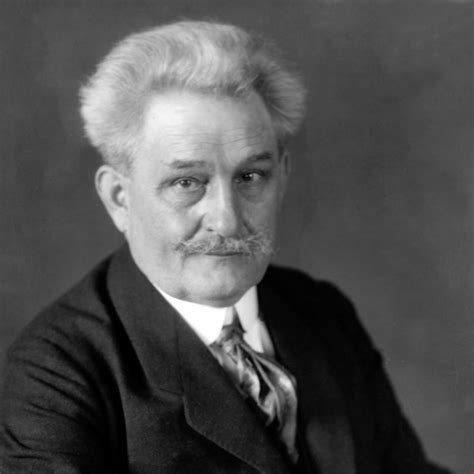
Leoš Janáček’s String Quartet No. 1, “The Kreutzer Sonata” was performed by Boston Artists Ensemble Sunday in Brookline.
According to Hegel, nothing great has ever been accomplished without passion.
Leoš Janáček’s String Quartet No. 1 would seem to subscribe to that sentiment. Written in 1923, its four movements offer an ardent response to Leo Tolstoy’s novella, The Kreutzer Sonata.
Taking its title from Beethoven’s eponymous work, the book traces the demise of a woman whose husband suspects her of having an affair and proceeds to murder her. Janáček, whose own relationships with women were often complicated, was drawn to the doomed heroine and his score aims to depict her plight sympathetically, albeit without providing redemption.
On Sunday, his impressively concise effort (the entire work runs just twenty minutes) formed the first half of Boston Artists Ensemble’s short concert at St. Paul’s Church in Brookline.
Oftentimes knotty and dense, this is music that doesn’t always lend itself well to ad hoc groups and, at times, this weekend’s combo—violinists Tatiana Dimitriades and Peter Zazofsky, violist Danny Kim, and cellist Jonathan Miller—sounded like they were still seeking a degree of unanimity. To be sure, a bigger dynamic range, bolder tonal contrasts, and more rigorous attention to intonation might have lent their reading a more compelling presence.
Even so, the foursome ably and consistently drew out the music’s sense of raw urgency. The first movement’s explosive violin-and-viola writing came out particularly well, as did the finale’s rocking gestures. There, the quartet’s shapely, folksy turns called to mind nightmarish Dvořák.
While the third section’s normale and sul ponticello required more definition (the former lacked for warmth), the Con moto was deliriously playful. Throughout, too, the collective made lean work of Janáček’s busy textures, especially the inner movements’ buzzing tremolos and sawing gestures. If not the last word in polish, Sunday’s interpretation was admirably fervent.
Beethoven’s E-minor String Quartet (No. 8) functioned as an interesting counterweight. Written in 1808, it shares more than a little in common with the later work, both in terms of its technical demands and its whiplash shifts of mood. Perhaps fittingly, BAE’s account of this classic exhibited similar strengths and weaknesses to their rendition of the Janáček.
In general, the group’s performance boasted a big dynamic range and lean textures. The ensemble periodically brought invigorating intensity to bear, as well, especially in the outer movements. The Allegro’s development section delivered on rhythmic focus, and, in the finale, the tetrad generated a conspicuously rich sonic profile. In that one, too, contrasts between the snappy first subject and nervous second were smartly delineated.
At the same time, intonation was, here and there, spotty and the larger effort lacked a degree of coordination and finesse. The outer parts of the Allegretto, in particular, felt tentative and lethargic, though that movement’s Trios were invitingly peppy.
The Adagio, however, unfolded with a mix of purity, songfulness, and devotion. According to Beethoven’s student Carl Czerny, this music was inspired by the composer pondering the night sky. Whether or not that tale is true, Zazofsky’s delivery of the first violin’s stratospheric lines lucidly conjured the stars.
Boston Artists Ensemble plays music by Mozart 8 p.m. January 8th at Hamilton Hall and 3 p.m. January 10th at St. Paul’s Church. bostonartistsensemble.org
Posted in Performances
Leave a Comment


 Subscribe via RSS.