Amid distractions, Levit manages to cut to the heart of Beethoven
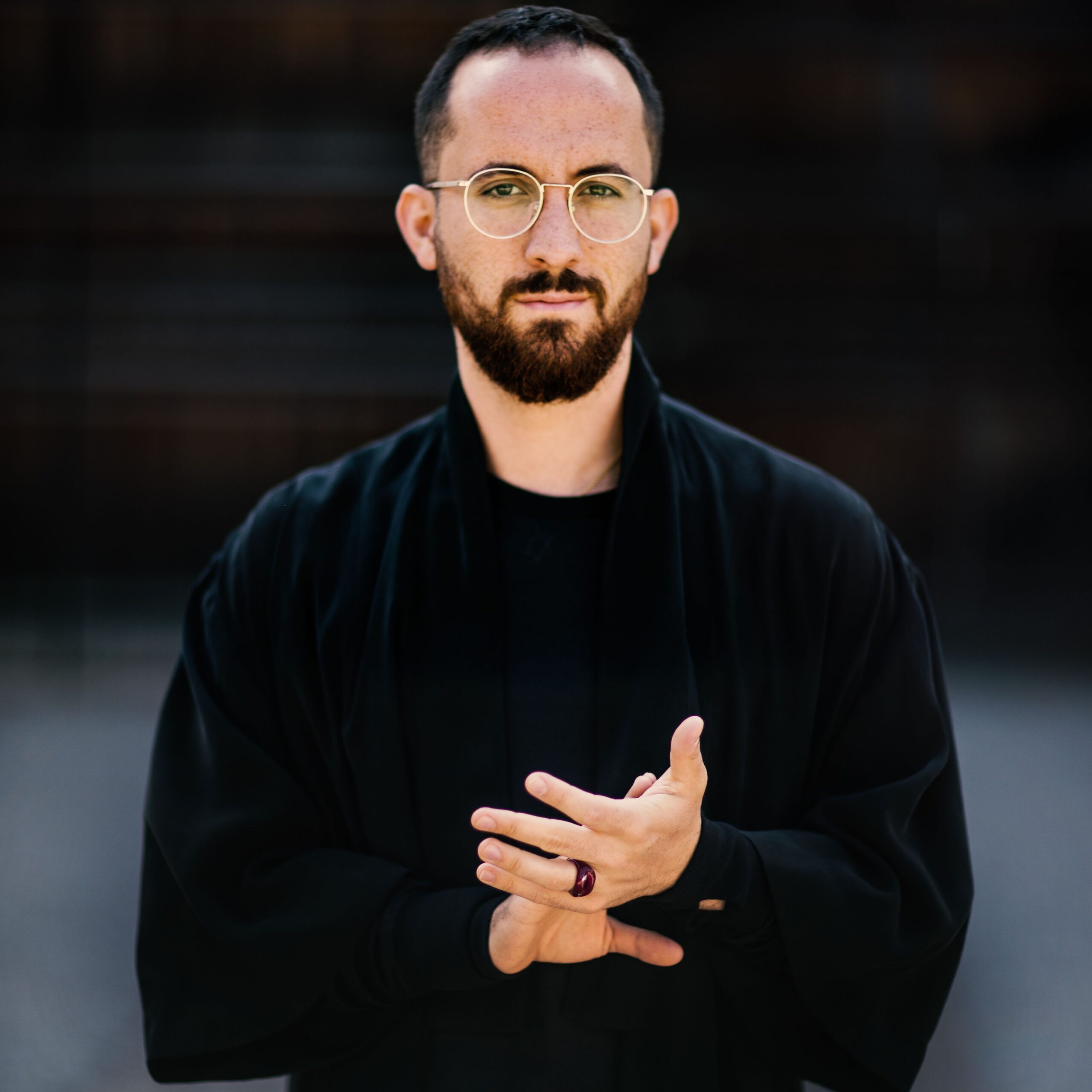
Igor Levit performed an all-Beethoven program Sunday at Symphony Hall, presented by Vivo Performing Arts. Photo: Felix Broede
Conductor and pianist became one as the renowned Igor Levit made his solo recital debut at Symphony Hall before a restless Boston audience.
Presented by Vivo Performing Arts Sunday afternoon, Levit brought an all-Beethoven program ahead of the 200th anniversary of the composer’s death in March 1827. Having recorded all 32 of the piano sonatas, Levit offered four that traced Beethoven’s path from his early years in Vienna to the daring middle period.
The disruptions began even before the music did. Late seating stretched on as Levit walked onstage, and he graciously waited for the last latecomers to settle. His surprise, and frustration, was visible, but he opened the Sonata in F minor, Op. 2, no. 1 with complete focus.
Beethoven wrote the work in his early 20s and dedicated it to his teacher Haydn. The four movements, with a minuet and trio placed third, are a symphonic layout, where Haydn’s and Mozart’s sonatas usually had three.
It was evident from the famous “Mannheim rocket” that opens the sonata that Levit had no intention of playing this program safely. The attack on the rising arpeggio was piercing, and he pushed every accent to its limit, which made the soft passages more prominent still. It was the kind of boldness that was itself Beethovenian.
His left hand conducted the right’s legato lines in the air, and each fortissimo and forte-piano landed with a thump of his foot. The Adagio was warm and gracious, with Levit letting the rubato roam free through its childlike melody. The first ringing phone intruded, souring the tender moment.
In the third movement, the balance between his hands was remarkable, and the dance rhythms shone. A controlled diminuendo at the movement’s close led to a pianissimo so soft it hardly seemed possible. At a blistering Prestissimo, the finale’s runs demanded real technique, and Levit delivered them vigorously.
In 1802, as his hearing failed, Beethoven retreated to the village of Heiligenstadt. That October he wrote a letter to his brothers confessing his despair, but resolved to keep writing music. The Sonata in D minor, Op. 31, no. 2, the “Tempest,” comes from this same turbulent year.
Moments into its tender, pianissimo opening, a ringtone echoed yet again. Levit stopped playing, bowed his head away from the audience, and began again. His two hands answered each other in the main theme with excruciating contrast and religious conviction. The Adagio is plain and gentle, and Levit let it speak simply. The finale, marked Allegretto, came as a shock. Levit took it so brazenly fast that the movement carried real risk, and at that speed its lines bled into a single muddy texture.
After intermission came the Sonata in G major, Op. 79, the only work Beethoven himself called a sonatina. Barely ten minutes long, it was a refreshing breath of light music amid an otherwise serious lineup. Levit made the hand crossings of the Presto alla tedesca almost imperceptible, gave the Andante a somber, holy stillness, and made the closing dance rustic and punchy.
The “Waldstein” Sonata, Op. 53, closed the program Beethoven dedicated the work to Count Ferdinand von Waldstein, his early patron in Bonn. It was the highlight of the afternoon.
Levit launched the Allegro con brio at a breathless pace, the left hand pounding with menacing urgency. A phone went off at the movement’s end. The audience chuckled, Levit chuckled too.
The Introduzione was spacious and tormented, rarely rising above forte, and it survived a fourth ringing phone. The finale brought idyllic, bounding joy, along with the same extreme contrasts that had defined the afternoon. Levit made the difficult writing look deceptively easy. The audience rose in a standing ovation.
Levit’s encore, Mendelssohn’s Songs without Words, provided a hushed, heartfelt coda to an afternoon of extremes. If it had words, they would have been “silence your phone.”
Vivo Performing Arts presents violinist Nemanja Radulović and the chamber orchestra Double Sens at 8 p.m. Nov. 13 at Jordan Hall. vivoperformingarts.org
Posted in Performances
Leave a Comment


 Subscribe via RSS.