NEP and friends celebrate American 250 with wide array of homegrown music
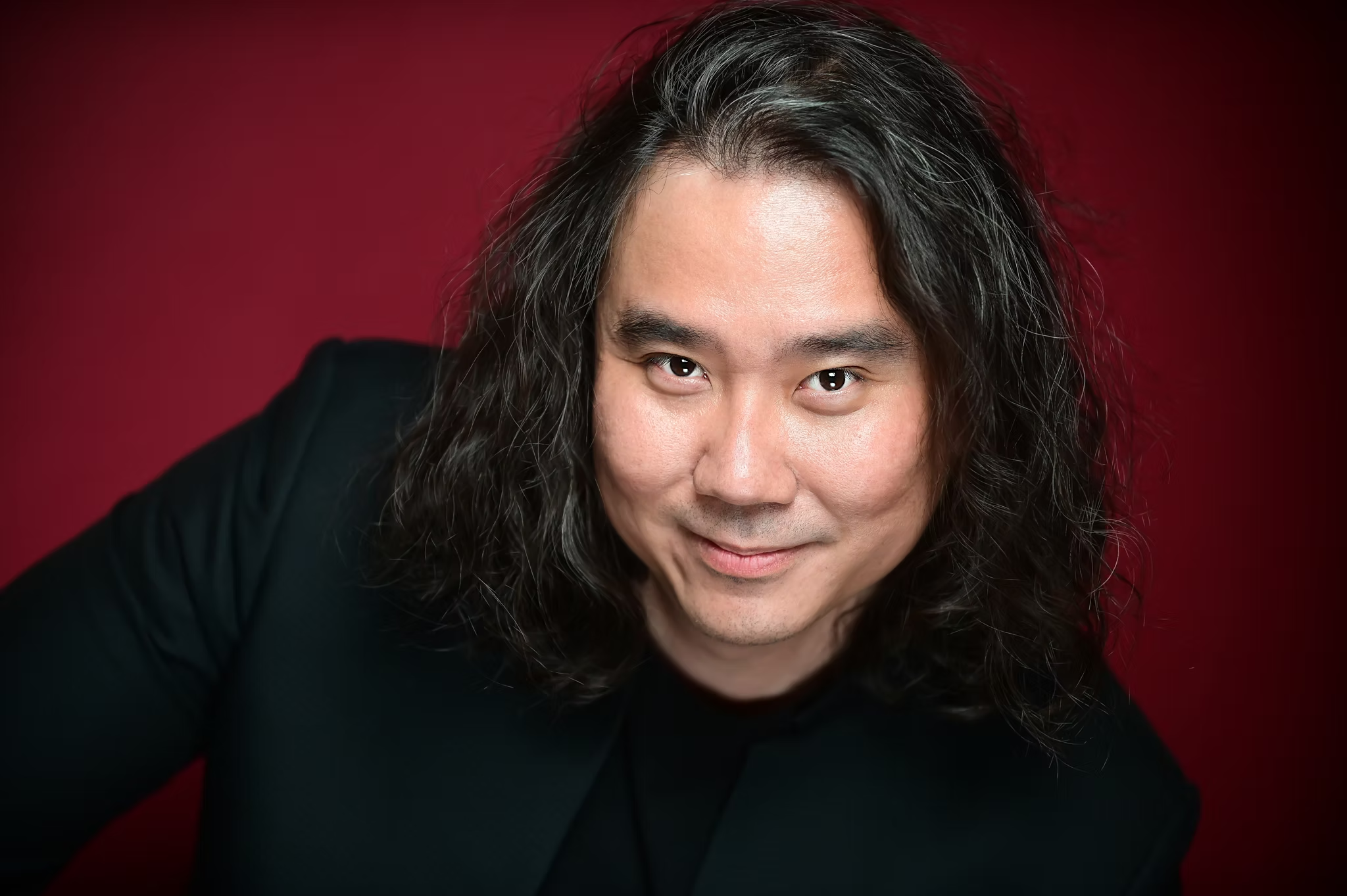
Music director Tianhui Ng opened the New England Philharmonic’s 50th season Saturday night.
The American Revolution was recalled Saturday night at Tsai Performance Center, with a fife and drum regiment to match.
Under music director Tianhui Ng, the New England Philharmonic opened its 50th anniversary season with tributes to Boston and America’s 250th. The intriguing program featured music by William Billings, Evan Meier, Louis W. Ballard, Joan Tower, William Schuman, and Leonard Bernstein.
The concert opened with the Middlesex County Volunteers Fifes & Drums garbed in reproductions of the Continental Army regimental uniform.
The band began with music of William Billings. Boston-born and self-taught, he was one of the most prolific American composers of the Revolutionary era, with more than 300 anthems, rounds, and hymns to his name as well as friendships with Samuel Adams and Paul Revere. An arrangement of Billings’s Lamentation over Boston was generous, and not a single corner of the hall was left untouched by their sound.
The NEP orchestra joined the band for Evan Meier’s Liberty: From the Ashes of Tyranny. It opens with Billings’s “Chester,” the unofficial anthem of the colonies, and mixes in Irish folk tunes, a drum feature, and Amy Cann’s “Catharsis.” With all the sonic power from the volunteer troop, no acoustic space was made for the orchestra and their presence was hardly felt except for the most forte of moments.
The volunteer troop bid their farewell, leaving the orchestra center stage for Ballard’s Incident at Wounded Knee. Ballard, born in Oklahoma in 1931 to a Cherokee father and a Quapaw mother, is widely regarded as the father of Native American classical composition.
The Saint Paul Chamber Orchestra commissioned this four- movement work in 1974. Ballard wrote it with two events in view: the 1890 massacre of more than 200 Miniconjou and Hunkpapa people by US troops, and the occupation of the same ground by the American Indian Movement in 1973.
“Procession” moves in an unsettled 7/8, built from terse fragments that fizzle out and syncopations everywhere. “Prayer” opened on solo cello at the top of its register, with a sound close to wailing and the cello section supporting sensitively beneath it.
“Blood and War” came with violent string writing and high glissandos stretched over a steady rhythmic pulse. “Ritual” set strings and woodwinds trading the lead in call and response, where the ensemble held impressive coordination. Then the closing forte arrived, and some sections took it a beat early.
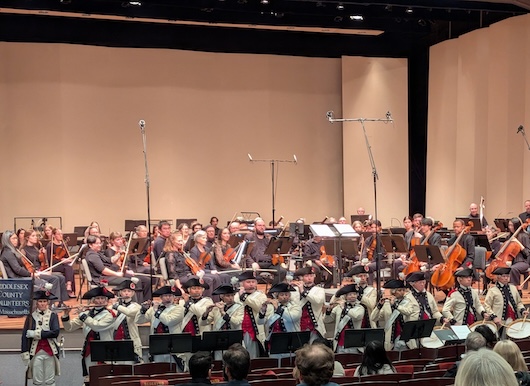
The Middlesex County Volunteers Fifes & Drums opened the NEP concert with music of William Billings. Photo: NEP
Joan Tower’s Violin Concerto brought concertmaster Danielle Maddon forward.
Composed in 1991, this single-movement work runs about eighteen minutes. Through different episodes, it swings between a full-throated Romantic melody for the orchestra, hard-edged rhythmic jabs, and passages that drift down from the violin’s highest register, closing fast on a fragment of Bartók’s Contrasts.
Maddon drew the high writing together with great control, and her duet with the associate concertmaster was particularly beautiful.
An energetic cadenza launched a closing stretch of arpeggios passing around the orchestra. The figures kept moving without really going anywhere, and went on repeating for a Ultimately, the players connected for the finish.
Following the intermission, Schuman’s New England Triptych returned to Billings, and with the corps offstage the orchestration could finally be heard. A solo timpani opens the fired movement and the strings answered with a jazzy legato under bright, secure brass.
The second movement, built on the round “When Jesus Wept,” presented sensitive playing from the orchestra. Ng led its long string lines with heart and the orchestra responded enthusiastically.
An uneven performance of Bernstein’s Symphonic Dances from West Side Story closed the concert. The percussion found real bite in the “Prologue” and the string interjections landed. “Somewhere” was the high point of the night. Its rising seventh was poised, Ng led the emotional charge once again and produced the best orchestral playing of the evening.
Little after it matched. The “Scherzo” came and went. “Mambo!” fell flat. The Maria “Cha-Cha” was charming, but the “Meeting Scene” exposed the violins’ intonation. Ng and the orchestra found relief in the “Finale” when the “Somewhere” melody returned, ending the evening on a calm hush.
The New England Philharmonic presents a family concert “Stories Passed Forward” 3 p.m. Dec. 6 at Boston University Tsai Performance Center. nephilharmonic.org
Posted in Performances
Leave a Comment
 Subscribe via RSS.