A modern premiere highlights Sarasa Ensemble’s season opener
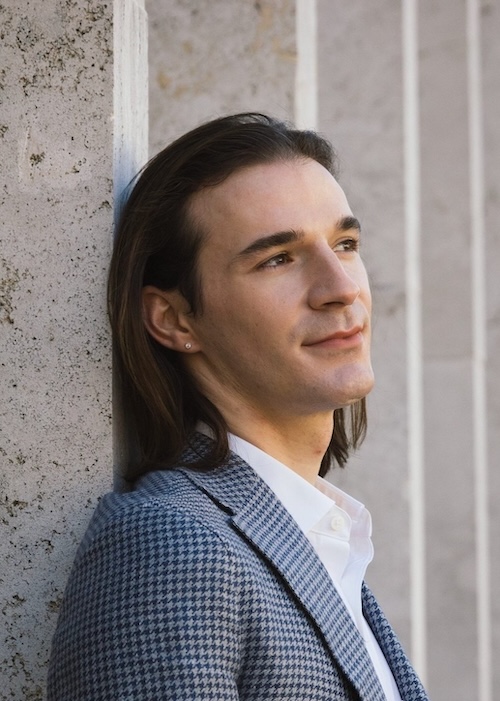
Tenor Richard Pittsinger was a guest soloist in the Sarasa Ensemble’s season-opening concert Saturday night in Cambridge.
A cabinet is an unlikely starting point for a concert, but “Schrank II” was no ordinary cabinet.
The name refers to the Dresden court’s 18th-century music cabinet, a repository of manuscript scores and parts that preserved repertory collected around one of Europe’s most cosmopolitan musical centers.
Much of its significance comes from Johann Georg Pisendel, Dresden’s concertmaster, whose collecting helped preserve a vivid record of French, Italian, and German Baroque styles circulating through the court.
Drawing on that archive, Sarasa Ensemble offered a bountiful if somewhat overpacked program Saturday night at Friends Meeting House in Cambridge.
With tenor Richard Pittsinger as vocal soloist, the small ensemble traced French, Italian, and German Baroque styles through 15 works by Locatelli, Vivaldi, Telemann, Handel, Campra, Lully, and Pisendel. Oddly though, the evening’s most interesting music came from a new work by composer (and Sarasa violinist) Rebecca Scout Nelson.
Nelson’s Augenblicke, receiving its world premiere, gave the program’s historic premise a personal center. Drawing on her childhood in Gera, Germany, the work moved between Lutheran chant, spoken recollection, folk-like fragments, and spare instrumental writing.
The text was dense with autobiographical and historical layers spanning excerpts from the Bible, German folksongs, Humperdinck, and Nelson. The work unfolded with directness, as Nelson’s narration embodied chamber recitative.
The most compelling moment came when the opening “Kyrie eleison” returned after Nelson’s account of neo-Nazi intimidation in post-reunification Germany. What had first sounded devotional came back darker and more burdened.
Pittsinger excelled in this work, bringing exquisite warmth to the work’s lyrical passages and a hearty triumph to the final “Vater im Himmel.”
The older works were more uneven as a sequence, though expertly played. Locatelli’s Sinfonia funebra made an intriguing opening, its long lines and pulsing continuo beautifully captured but not especially gripping as music.
Pittsinger sounded constrained at first in Vivaldi’s “Non sempre folgora,” where the Meeting House’s stark acoustic did him few favors. Still, the ensemble caught Vivaldi’s storm imagery with rumbling continuo and crisp dramatic turns, and Pittsinger’s upper register carried a sweeter resonance.
Handel’s Dolce pur d’amor l’affanno was a graceful recovery for Pittsinger. In Campra’s “Sommeil, qui chaque nuit jouissez de ma belle,” his line relaxed, letting the French air’s tenderness emerge.
The instrumental selections made the program’s stylistic contrasts more manifest. Telemann’s Les Nations had an easy charm in the first half, while Pisendel’s Imitation des caractères de la danse showed violinists Rebecca Scout Nelson, Susanna Ogata, and Nelli Jabotinsky at their sharpest, tightly coordinated across its compact dance movements.
Pisendel’s Imitation des caractères de la Danse work also gave the program one of its clearest links to Schrank II. The Dresden violinist and concertmaster was central to the collection’s preservation, and Sarasa’s three violinists made his sequence feel vivid and full of character.
After intermission, Lully’s Persée brought theatrical heat, with Pittsinger digging into the scene’s anger. Handel’s “There let Hymen oft appear” found him in a more joyful mode, energetic but controlled.
John McKean’s harpsichord gave Vivaldi’s La verità in cimento a welcome bite, especially in the final Allegro e forte. Pittsinger kept “La tiranna avversa sorte” fresh through its repeated lines, giving each return renewed energy.
The evening’s best ensemble playing came at the close, when Telemann’s “Les Turcs” and “Les Moscovites” snapped into a more vivid, militaristic profile. Two Vivaldi encores, “Cessa tiranno amor” and “Il figlio, il reo,” added a final flourish to an already generous evening.
The program will be repeated 3 p.m. Sunday at Follen Church in Lexington. sarasamusic.org
Posted in Performances
Leave a Comment
 Subscribe via RSS.