Penderecki’s “Credo” proves a challenge for NEP in ambitious season finale
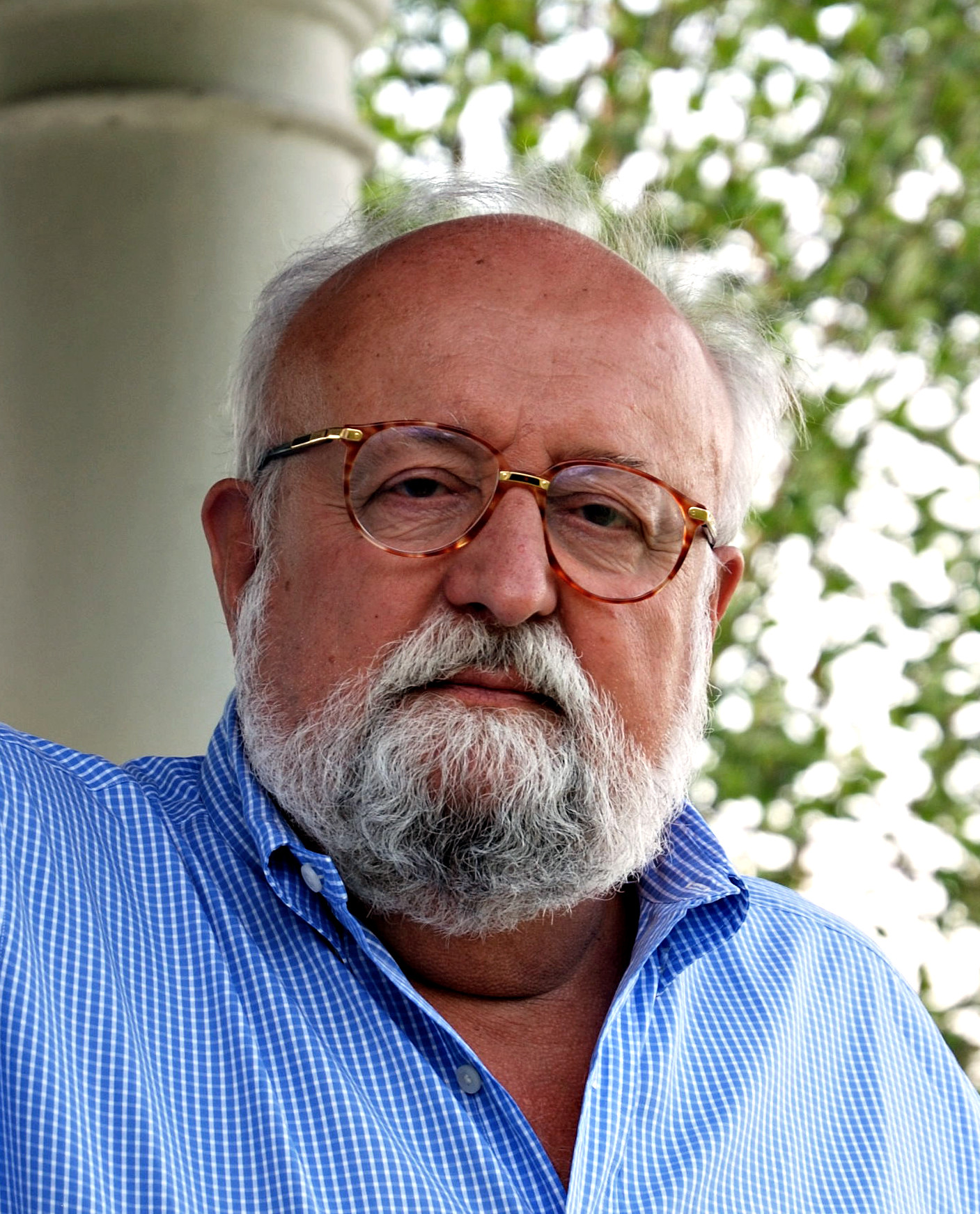
Krzysztof Penderecki’s Credo was performed by the New England Philharmonic Saturday night at First Church Cambridge.
The New England Philharmonic closed its 49th season Saturday night at First Church Cambridge, with a program centered on Krzysztof Penderecki’s mighty Credo.
The evening began with Cantares by NEP composer-in-residence Carlos Carrillo. Written in 1993, Cantares was inspired by “The Song of Songs.” Carrillo envisioned this work “as a series of love songs, each merging into the next.”
The roughly 20-minute, single-movement work unfolds in two distinct sections and alternates between prolonged dissonances and sudden shifts to melodic lyricism. The opening was marked by dense orchestral climaxes that the ensemble executed well under conductor Tianhui Ng.
As the work continued, the thick texture dissipated to a lighter, amorphous sound world where the orchestra excelled. Carrillo’s writing also opened up here, with more dynamic orchestration, highlighting different sections that exchanged melodies. The woodwinds and cellos stood out with heartfelt playing; principal cellist Jason Coleman closed the work in a chant-like solo of quiet, affecting beauty.
The evening’s main work, Penderecki’s Credo, presented a far greater challenge.
Commissioned by Helmuth Rilling for the Oregon Bach Festival in 1998, the work marks a stylistic turning point. Known in his early career for avant-garde experimentalism, Penderecki shifted in his later years toward a more traditional tonal language and large-scale works.
The Credo, lasting roughly 50 minutes and divided into seven movements, sets the Latin Nicene Creed alongside hymns and biblical passages in Latin, Polish, and German. This expansive work demands extraordinary coordination among five vocal soloists, a children’s choir, a mixed chorus, and a full orchestra.
Penderecki’s Credo is an ambitious undertaking for a non-professional ensemble, and Ng and the New England Philharmonic deserve credit for taking on this demanding, massive work.
Yet execution was often lacking and ensemble coordination faltered frequently. The brass section split notes with uncomfortable regularity, an issue that became especially noticeable in the final sections. The Children’s Chorus Voices Boston, positioned for impact in moments of transcendence, barely registered in the reverberant hall.
Also lacking was a wider dynamic palette. When the volume swelled, it swelled with relentless force, leaving little room for the subtle gradation that could have provided breathing room and emotional variety.
On the plus side, Chorus Pro Musica brought dramatic clarity to sections like “Et resurrexit tertia die”, where rhythmic bite and syncopated intensity shone.
The soloists provided some of the most effective moments. Mezzo-soprano Lucia Bradford stood out demonstrating an exceptional expressive range and warm tone that sustained Penderecki’s lyrical “Et incarnatus est.”Bass-baritone David McFerrin brought a steady, resonant presence throughout. Soprano Carami Hilaire, mezzo-soprano Mary Kray, and tenor Spencer Hamlin navigated the work’s considerable vocal demands, though Hamlin showed signs of strain in the latter movements, which contain some of Penderecki’s most relentless writing.
The “Amen” that closes the piece was the performance’s most convincing moment—a unified, contemplative affirmation that emerged with sincere conviction. It was a small victory at the close of an ambitious yet mixed musical evening.
Posted in Performances
Leave a Comment
 Subscribe via RSS.