Pro Arte opens season with stately Mozart and thrilling Ginastera
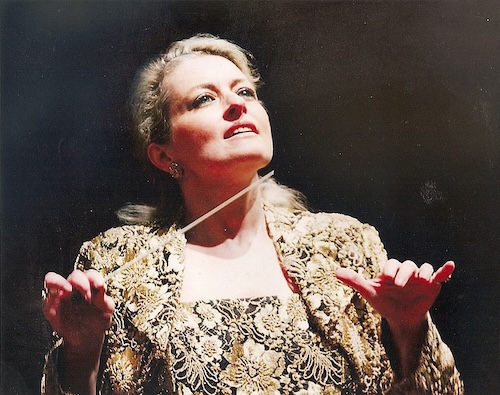
Gisèle Ben-Dor conducted the Pro Arte Chamber Orchestra’s season-opening concert Sunday at the Sanders Theatre in Cambridge.
The Pro Arte Chamber Orchestra launched its season on Sunday with a program that paired Mozartian elegance with South American fire. Led by conductor emerita Gisèle Ben-Dor, the afternoon began in Vienna and ended on the Pampas, showcasing the ensemble’s stylistic range and flair for storytelling.
The Overture to Mozart’s Don Giovanni opened the concert at the Sanders Theatre with an apt preview of the orchestra’s strengths. Ben-Dor led with grace and elicited well-knit ensemble playing. The style was perhaps a shade too stately to underline the music’s stark contrasts of dark solemnity and comic relief, but the performance nevertheless set a noble tone befitting the opera.
Mozart’s Piano Concerto No. 17 in G featured pianist Seokyoung Hong—who at 18 is nearly the same age as Barbara Ployer, Mozart’s own student who premiered the work. Hong brought a youthful energy and striking poise to this performance, as befitting the piece in its quintessential Mozartian character.
The orchestral introduction was similarly square as in the Overture, but Hong entered at a noticeably brisker tempo, quickly taking command of the pacing. While the speed felt exciting, it left less breathing room for the music’s natural elegance, and some phrases felt compressed. However, the first piano cadenza seemed to reset all: the full extent of Hong’s expressive, dynamic range was on display, with fireworks of virtuosity and perfect pearls of sound decorating each phrase.

Seokyoung Hong performed Mozart’s Piano Concerto No. 17 on Sunday.
The Andante unfolded with luminous wind textures and careful dialogue between soloist and orchestra. Hong’s entrance seemed restrained—pianistic rather than singing at first—but gradually bloomed into a supple, vocal line. The cadenza was breathtaking, and here the prodigy proved himself a true artist, commanding the attention of the room to rapt silence.
The closing Allegretto danced with charm and chirping, though key wind lines occasionally struggled to emerge through the piano’s thicker textures. The finale was exhilarating in thicker unison and the well-coordinated ending phrase.
After intermission came the complete score of Ginastera’s ballet Estancia, less often performed than its suite version. This vital score proved a natural vehicle for Ben-Dor’s dynamic presence. Her large, vividly communicative gestures captured the music’s lassos, wide expanses, and fiery sparks.
Pro Arte reveled in Ginastera’s kaleidoscopic rhythms and folk-inflected harmonies, proving that a chamber orchestra can summon full-bodied, visceral power. The “Danza del trigo” and “Danza final” were especially explosive, containing true rhythmic integrity to dance with unison stomping accents. A surprising standout in the performance was “Los puebleros,” where polyphonic textures appeared layer by layer, almost fugal in writing. This orchestra’s clean textures allowed the theme to punch through every time.
Clad in a poncho, baritone Marcelo Guzzo, brought commanding presence and a resonant timbre to his role as vocalist and guide through the gaucho’s tale. His rapid narration had clarity and rhythmic snap, providing meaningful direction to the poetry.
Guzzo’s excerpts of “Triste pampeano” and “La noche” revealed a rich, booming voice and expressive phrasing, even if much of the text was lost in the consonant-depleting acoustic of Sanders Theatre.
Before Guzzo’s entrance in “La noche,” the orchestra spun dark, late-Romantic sensibilities into the musical tapestry, aided by solo violin and viola octaves so precisely lined that they sounded like a single instrument.
This Estancia was a thrilling experience and showcased the best part of Pro Arte. The intention of each movement came through with the context of the story, and the various sections were distinctly varied. The finale, insistently repeating the dance theme, exploded in sound and surrounded the audience, almost as if the audience were immersed in the middle of a never-ending, festive parade.
Guzzo and the orchestra provided two encores (sans poncho): the titular character’s Serenade (“Deh, vieni alla finestra”) from Don Giovanni, and Carlos Gardel’s tango “El día que me quieras.” Though diction was still murky, Guzzo’s beautifully shaped lines and emotive delivery shined through.
Pro Arte Chamber Orchestra presents works by Bartók, Elfrida Andrée, Copland, and Poulenc 3 p.m. November 2 at Second Church in Newton. proarte.org
Posted in Performances
Leave a Comment
 Subscribe via RSS.